
Yves Griffin · 14 September 2026
Uncovering Hidden Supply Chains Behind Port-Inspired Home Textiles
Port-inspired home textiles draw from maritime motifs and harbor aesthetics, and their production involves complex supply chains that stretch across continents. Researchers have mapped these networks to reveal where raw fibers originate, how fabrics get processed, and which ports serve as critical hubs for distribution. Data from industry reports shows that many such textiles incorporate linen, cotton, and blends sourced from regions with established shipping routes, while manufacturing often occurs in facilities located near major trade gateways.
Tracing Raw Material Origins in Maritime-Themed Textiles
Flax for linen components typically comes from agricultural areas in Europe and Asia, and these fibers travel through established port networks before reaching spinning mills. Cotton used in similar products often originates in the United States, India, or Australia, with bales shipped via container vessels to processing centers in Asia. Observers note that port-inspired designs frequently feature elements like anchors, waves, and rigging, yet the materials themselves pass through hidden layers of suppliers that include ginners, weavers, and dyers located far from the final assembly sites. Trade statistics indicate that over 60 percent of global textile fibers move through a handful of key ports each year, creating bottlenecks that affect pricing and availability for home goods manufacturers.
One study from textile research institutions found that hidden intermediaries sometimes reroute shipments to avoid tariffs or to access lower-cost labor markets, and this practice adds steps to the chain that consumers rarely see. Experts have documented cases where port-adjacent factories in Southeast Asia receive materials from multiple continents before cutting and sewing nautical-themed bedding or upholstery. The process requires coordination among freight forwarders, customs brokers, and quality inspectors who operate at different stages of the journey.
Manufacturing Hubs and Distribution Networks
Production facilities for these textiles cluster around ports in countries such as Vietnam, Bangladesh, and Turkey, where proximity to shipping lanes reduces transit times. Workers at these sites handle printing of maritime patterns, embroidery of rope motifs, and finishing treatments that give fabrics their characteristic durability. According to data compiled by supply chain analysts, these hubs rely on just-in-time deliveries of dyes and trims that arrive via smaller feeder vessels from larger transshipment ports. In September 2026, updates to international trade documentation standards are scheduled to take effect, and these changes will require more detailed origin declarations for textile imports entering major markets.
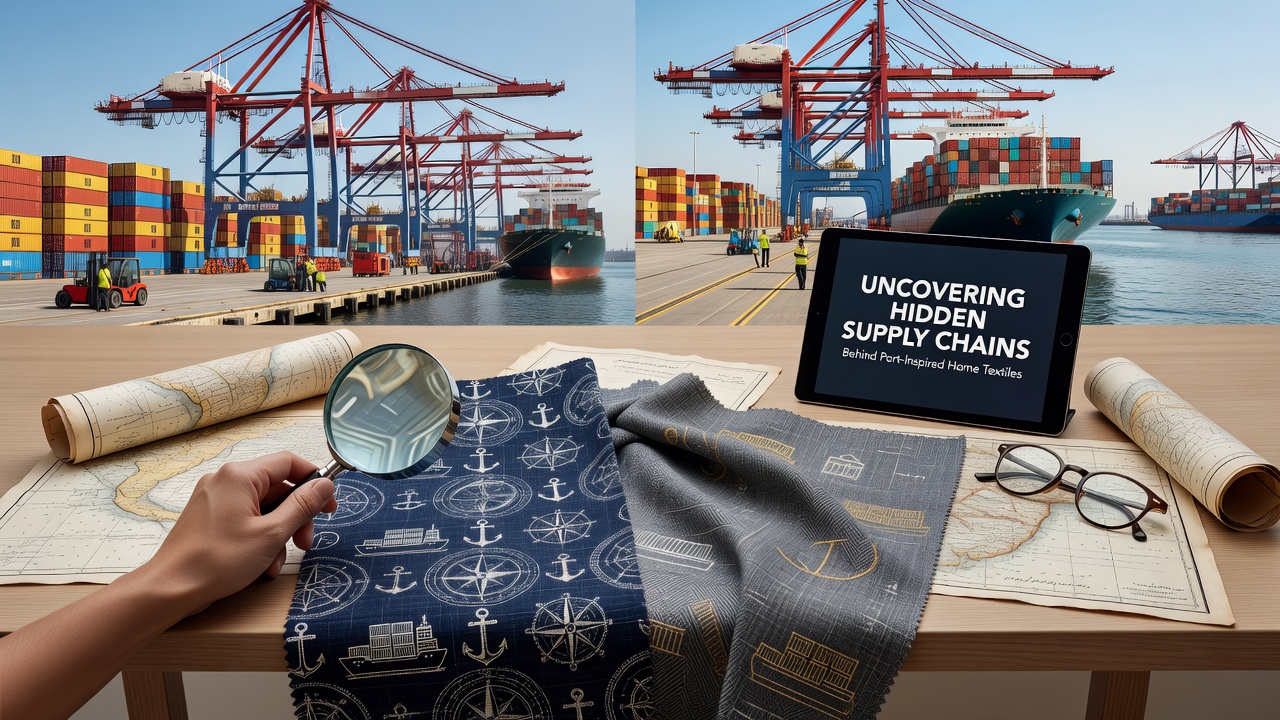
Logistics partners coordinate container movements that link inland farms to coastal factories and finally to retail distribution centers. Figures from logistics databases reveal that average lead times for port-inspired collections span four to six months from fiber harvest to finished product arrival. Some manufacturers maintain satellite operations near secondary ports to handle overflow orders or to diversify risk when primary routes face disruptions from weather or congestion.
Transparency Challenges and Regulatory Developments
Hidden segments of the supply chain often involve subcontractors who perform specialized tasks such as digital printing or chemical finishing, and these entities may not appear in primary contracts. Regulatory bodies in the European Union have introduced requirements for due diligence reporting on textile imports, while similar frameworks exist in Canada and Australia that focus on labor and environmental standards. A report from the OECD highlights how port-related logistics can obscure the true origin of components when multiple transshipments occur. Industry associations have responded by developing traceability platforms that use blockchain or digital tagging to record each handoff along the route.
Those who study these networks point out that port-inspired home textiles benefit from the same infrastructure that supports global apparel trade, yet the specialized designs require additional coordination for pattern approval and color matching. Customs records show increased scrutiny on shipments declared under textile categories that include nautical themes, partly because of concerns over mislabeling of fiber content or country of origin. Academic papers from university research programs have examined how port efficiency influences the carbon footprint of these products, with shorter sea routes sometimes offset by longer overland legs to reach inland consumers.
Future Outlook for Supply Chain Visibility
Advancements in tracking technology continue to expose previously opaque stages in the production of port-inspired textiles. Government agencies across multiple regions now encourage voluntary disclosure programs that list tier-two and tier-three suppliers, and participation has grown steadily. Data indicates that companies adopting these tools see improvements in risk management when sourcing materials tied to specific port operations. In the coming years, further integration of satellite monitoring and automated customs filings is expected to tighten oversight without disrupting established trade flows.
Conclusion
Supply chains supporting port-inspired home textiles remain intricate networks shaped by geography, regulation, and technology. Researchers continue to document how fibers move from farms through ports to factories, while new documentation standards set for September 2026 promise greater clarity. Industry participants rely on data from diverse sources to navigate these routes, and ongoing developments in traceability offer tools to address longstanding gaps in visibility.